On this page
- Everyday examples
- The main uses of tin, by share
- Why tin suits so many jobs
- Solder: the largest use
- Tinplate and food cans
- Tin alloys: bronze, pewter and bearing metals
- Tin chemicals
- Flat glass: tin as a floor for molten glass
- Specialist and newer uses
- A short history of tin’s uses
- What tin costs
- Where tin comes from, and how much is recycled
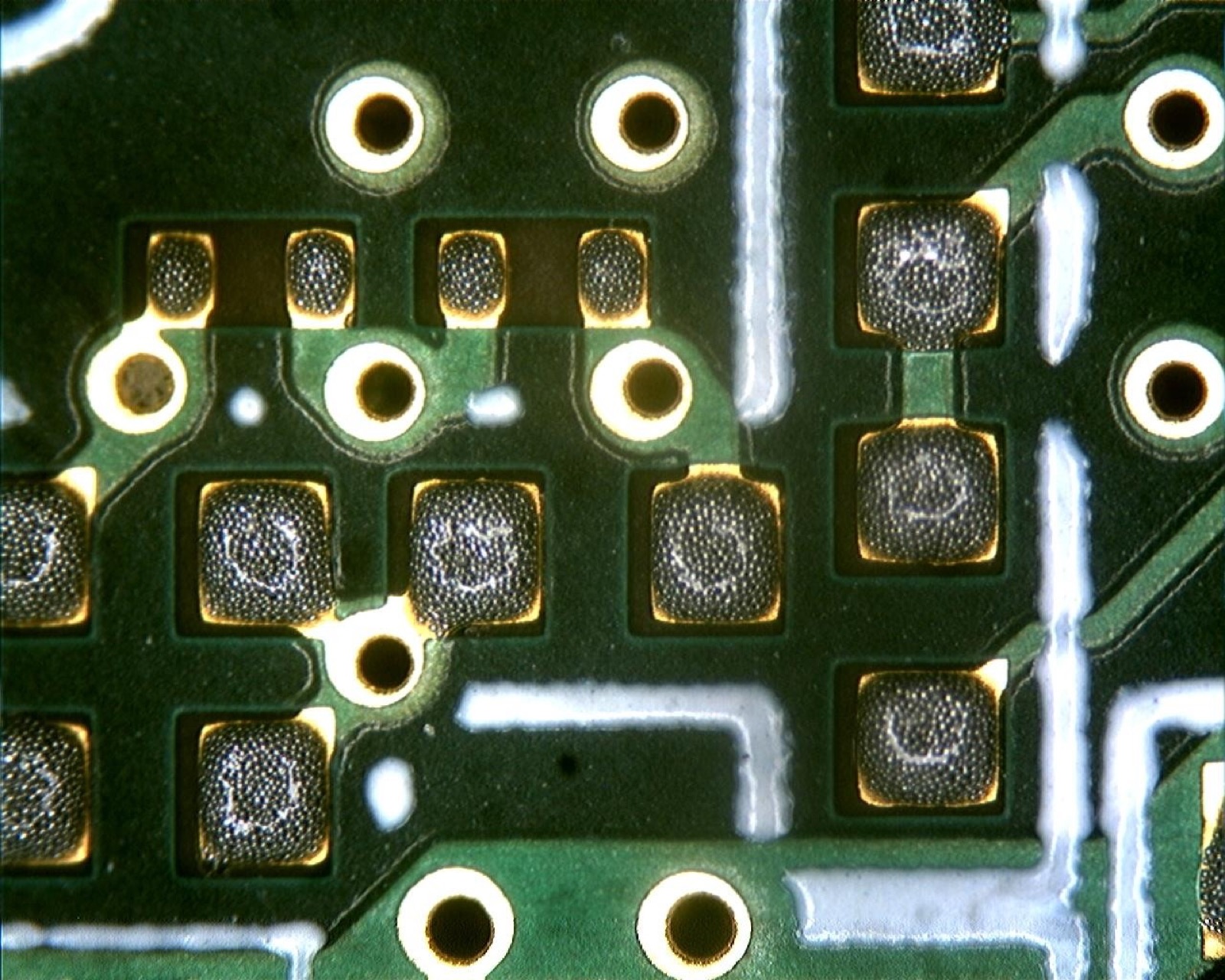
A little tin is present in almost everything that is joined, coated, cast or conducted, which is why the International Tin Association calls it the spice element. Most of it is hidden: inside a solder joint, behind a lacquer layer in a can, or in the bearing of an engine. If you remember one number, make it 52%: that is the share of all tin that ends up in solder. Everything else is a smaller slice. The tin uses hub collects the detailed guides; this page walks through each use, the share it takes and the history behind it.
Everyday examples
Phones, laptops and televisions hold tin in the solder that joins the circuit board, and solder is the largest use of tin, mainly for electronics. Tinplate food cans and metal packaging take 11% of tin. Bronze bells and cymbals are mostly copper with about 12% tin. Giftware and tankards are pewter, an alloy of tin (85 to 99%) with antimony and copper. And window glass is made by floating molten glass on a bath of molten tin.
The main uses of tin, by share
Solder is the largest use of tin. Tin chemicals come second. Tinplate, the tin-coated steel used for cans, comes third by the trade association’s count. The remainder goes to alloys such as bronze and pewter, flat glass, batteries and other uses, which the trade association’s page does not itemise. The table gives the global split, then the split for the United States from the US Geological Survey.
| Use (global) | Share of tin | Source |
|---|---|---|
| Solder, mainly for electronics | More than half (52%) of all tin each year | |
| Tin chemicals | 16% of tin | |
| Tinplate food cans and metal packaging | 11% of tin |
| Use (United States, 2025) | Share of tin | Source |
|---|---|---|
| Chemicals | 25% | |
| Tinplate | 16% | |
| Alloys | 12% | |
| Solder | 11% | |
| Babbitt, brass and bronze, and tinning | 7% | |
| Bar tin | 2% | |
| Other | 27% |
The two splits differ because they measure different markets. The US figures are for 2025 consumption in one country, which has not mined tin since 1993 or smelted it since 1989. The global figures come from the trade body and carry no year on the page. Older estimates put tinplate near 20% of tin use; the trade body’s current breakdown is 11%, and this page uses that one.
Other uses are smaller but familiar: tin and other alloys, including powders and coatings, go into brake pads, roofing, engineering and bearings. Copper alloys including bronze are still widely used, from sculpture to electrical products.
Why tin suits so many jobs
Tin is a soft, malleable, ductile and highly crystalline silvery-white metal. Geoscience Australia lists the properties that matter in practice: it is soft, highly rust-resistant and fatigue-resistant, non-toxic and highly malleable. It alloys easily with other metals, has a low melting point and is easy to recycle.
Tin does not corrode in air or water, which makes it ideal for storing food. It resists corrosion from water but can be corroded by acids and alkalis. It can be highly polished and is used as a protective coat for other metals.
Two quirks explain odd behaviour. When a bar of tin is bent it makes a sound, the so-called tin cry, as a result of twinning in the crystals. In cold conditions the common beta form tends to transform spontaneously into the grey alpha form, a phenomenon known as tin pest. White tin returns to grey tin as it cools below 13.2 °C. The change can be prevented by alloying tin with antimony or bismuth, and commercial grades of tin (99.8% tin content) resist it because of small amounts of bismuth, antimony, lead and silver.
Solder: the largest use
Solder is a fusible metal alloy used to create a permanent bond between metal pieces. Solders are used in electronic parts, plumbing, machinery and cars.
Soft solder typically has a melting point range of 90 to 450 °C. Alloys that melt between 180 and 190 °C are the most commonly used. Tin-lead solders are commercially available with tin concentrations between 5% and 70% by weight. The greater the tin concentration, the greater the solder’s tensile and shear strengths. Tin is more expensive than lead, but adding it improves the wetting properties of the alloy.
The classic electrical mix is 60/40 tin-lead, which melts at 188 °C. Tin with lead forms a eutectic mixture at 61.9% tin and 38.1% lead, with a melting temperature of 183 °C. That is the lowest melting point of any tin-lead alloy.
Lead-free solder and the rules behind it
Lead is limited in electrical goods. Under the GOV.UK RoHS guidance, in Great Britain and Northern Ireland many types of electrical and electronic equipment are regulated to control the levels of certain hazardous substances. The Restriction of the Use of Certain Hazardous Substances in Electrical and Electronic Equipment Regulations 2012 (as amended) are the underpinning legislation. Manufacturers must keep products within maximum prescribed levels, among them cadmium (0.01%), lead (0.1%) and mercury (0.1%).
Since the EU directives on electrical waste and hazardous substances came into effect on 1 July 2006, the lead content of tin-lead alloys has decreased. Lead-free solders in commercial use may contain tin, copper, silver, bismuth, indium, zinc, antimony and traces of other metals. A common lead-free alloy is 99% tin, 0.7% copper and 0.3% silver, with a melting temperature of 217 °C. Most lead-free replacements for 60/40 and 63/37 solder have melting points from 50 to 200 °C higher.
Tin-silver-copper solders are used by two-thirds of Japanese manufacturers for reflow and wave soldering, and by about 75% of companies for hand soldering. Lead-free solder is not without its challenges, including a higher melting point and the formation of tin whiskers that cause electrical problems. Tin pest can occur in lead-free solders, leading to loss of the soldered joint.
Epoxy resins can substitute for tin in solder. Solder used for joining solar cells is already adding to tin use.
Tinplate and food cans
The famed tin can is a steel can with a microscopically thin coating of tin. Steel alone would rust, and tin alone would be too soft and too expensive. Tin bonds readily to iron and is used for coating lead, zinc and steel to prevent corrosion. Because of the low toxicity of inorganic tin, tin-plated steel is widely used for food packaging.
Tinplate is mainly used in food cans, some beverage cans, general line cans for chemicals, paints and dry products, and in can ends. Global consumption of tinplate remains static or declining. At one point over forty million tin cans were produced every year, but aluminium and other containers have reduced that number. Aluminium, glass, paper, plastic or tin-free steel substitute for tin in cans and containers.
Better technology has cut steel use in cans by 20% and tin use by 50%. Around 65% of steel cans are recycled. Nausea, vomiting and diarrhoea have been reported after ingesting canned food containing 200 mg/kg of tin.
How the tin can began
The Dutch are noted as the first to tin food, with their Navy carrying brine-cooked salmon in tin-plated iron boxes as early as 1772. In 1795 Napoleon Bonaparte offered a prize for a way of keeping food fresh for longer. Nicholas Appert found that food boiled in glass bottles and sealed at once would keep for several months. In 1810 Peter Durand patented the first tinplate food container. A tinplate canister for preserving food was first manufactured in London in 1812.
In 1812 Durand sold his patent to Bryan Donkin and John Hall, who set up the world’s first commercial canning factory on Southwark Park Road, London. By 1813 they were producing their first tin canned goods for the Royal Navy. In 1825 a ship carrying tinned foods to the Arctic sank, yet nearly 100 years later some of the containers were recovered and the contents were still fresh enough to eat.
Other tin-plated goods
Copper cooking vessels such as saucepans and frying pans are frequently lined with a thin plating of tin, since using copper cookware with acidic foods can be toxic. The tin whistle is so called because it was mass-produced first in tin-plated steel. Tin foil has been made since the Eastern Zhou period of China, though the cheaper aluminium foil largely supplanted it by the 20th century.
Tin alloys: bronze, pewter and bearing metals
Tin in combination with other elements forms a wide variety of useful alloys. It is most commonly alloyed with copper. The table lists the main recipes.
| Alloy | Typical recipe | Source |
|---|---|---|
| Bronze (modern) | About 88% copper and 12% tin | |
| Bell metal | Typically about 23% tin | |
| B20 bronze (cymbals, banjo tone rings) | Roughly 20% tin, 80% copper | |
| B8 bronze | 8% tin and 92% copper | |
| Classic Bronze Age casting bronze | About 10% tin | |
| Coin bronze | About 4% tin and 1% zinc | |
| European pewter casting alloy | 94% tin, 1% copper and 5% antimony | |
| Asian pewter | Usually 97.5% tin, 1% copper and 1.5% antimony |
Bronze
Bronze is an alloy consisting primarily of copper, commonly with about 12–12.5% tin. It is used for statues, bearings in car engines and heavy machinery, and musical instruments such as bells, cymbals and gongs. Church bells are made of bronze with a high tin content. As the tin content in a bell or cymbal rises, the timbre drops. Alpha bronze alloys of 4–5% tin are used to make coins, springs, turbines and blades. Some companies now make saxophones from phosphor bronze, with 3.5 to 10% tin. Tin has sometimes been used in coinage, once as a single-digit percentage of American pennies.
Pewter, Britannia metal and organ pipes
Pewter is a malleable alloy of tin (85–99%), antimony (approximately 5–10%) and copper (2%). It has a low melting point, around 170–230 °C. In the past it was an alloy of tin and as much as 40% lead. Modern lead-free pewter casting alloys are typically high-tin compositions that give good fluidity and a bright polished finish. The earliest known piece of pewter was found in an Egyptian tomb, c. 1450 BC.
Pewter went out of favour in the early 19th century as fashion changed, then returned in the late 19th century with the revival of medieval objects. It is used for beer tankards, candlesticks and salt and pepper shakers. Traditional pewter giftware is still highly valued, and tin wine capsules are used in luxury wines and spirits.
Most metal pipes in a pipe organ are of a tin/lead alloy, with 50/50 the most common composition. The advantages of tin for pipes include its appearance, workability and resistance to corrosion.
Bearings and engineering
Tin is commonly used as an alloy for bearing metal and in metallic coatings. A small percentage of tin is added to zirconium alloys for the cladding of nuclear fuel.
Tin chemicals
Tin chemicals for PVC stabilisers, polymer catalysts and numerous other applications are the second largest tin use, with steady growth. Tin compounds are used in the production of various chemicals, including stabilisers for PVC and catalysts for industrial processes.
The major commercial application of organotin compounds is in the stabilisation of PVC plastics. Worldwide industrial production of organotin compounds likely exceeds 50,000 tonnes. Organic compounds of tin are also used in plastics, wood preservatives, pesticides and fire retardants. Some organotin compounds can be extremely toxic.
Tributyltin was used as an additive for ship paint to prevent growth of fouling organisms, with use declining after organotin compounds were recognised as persistent organic pollutants with high toxicity for some marine organisms. High concentrations of tributyltin have been found in marine sediments near naval docks. Tin compounds are still used in polymer additives, mordants for dyeing and anti-fouling paints for ship hulls.
Inorganic tin compounds are used in ceramics and glazes. Tin oxide is used as a white glaze on pottery, including tiles, and glassware, and can be coloured with other metal oxides. Tin(IV) oxide, sold as Pigment White 15, is used for its iridescence, most commonly as a ceramic glaze. Lead-tin yellow was historically a highly important pigment for oil painting.
Tin compounds sprayed onto glass produce an electrically conductive coating. The oxides of indium and tin are electrically conductive and transparent, and are used to make transparent conducting films for devices such as liquid crystal displays. Tin(II) fluoride is added to some dental care products. Tin is believed to be an essential trace element in humans and other species, making up 0.00003% of the human body.
Flat glass: tin as a floor for molten glass
Window glass is most often made by floating molten glass on molten tin, which gives a flat and flawless surface. The method is also called the Pilkington process. Full-scale profitable sales of float glass were first achieved in 1960, and in the 1960s the process spread across the world, replacing previous production methods.
The raw materials are fed with cullet into a furnace and heated to approximately 1,500 °C. The molten glass then enters a bath of molten tin about 3–4 m wide, 50 m long and 6 cm deep. As the glass flows along the tin bath, the temperature is reduced from 1,100 °C until at approximately 600 °C the sheet can be lifted from the tin onto rollers. Tin oxidises in a natural atmosphere to form tin dioxide.
Specialist and newer uses
Niobium–tin is commercially used in coils of superconducting magnets, for its high critical temperature (18 K) and critical magnetic field (25 T). A superconducting magnet weighing as little as two kilograms can produce the magnetic field of a conventional electromagnet weighing tons.
Tin is used as a negative electrode in advanced Li-ion batteries. It is also used as a target to create laser-induced plasmas that act as the light source for extreme ultraviolet lithography. Tin use in lead-acid batteries, especially in China, is expected to grow steadily with more start-stop and microhybrid vehicles.
More than 5,000 scientific papers and patents on tin-related technologies are published every year. Energy uses and technologies are the strongest new use drivers, with tin additions to lead-acid batteries and solder used for joining solar cells already benefiting. Over the next decade tin has many opportunities in sodium-ion and other batteries, solar PV, thermoelectric materials, hydrogen-related applications and carbon capture. Tin was early in the race for earth-abundant materials to replace expensive and rare elements in solar PV. Tin selenide has been hailed as the world’s best thermoelectric material because of its unique crystal structure. Tin oxide nanomaterials are very good adsorbents for water contaminants.
A short history of tin’s uses
Tin is one of the few metals that has been used and traded by humans for more than 5000 years. Tin extraction and use can be dated to the beginnings of the Bronze Age around 3000 BC. The earliest tin-copper-alloy artefact has been dated to c. 4650 BCE, at a Vinča culture site in Serbia. Tin became the major non-copper ingredient of bronze in the late 3rd millennium BCE.
Tin bronze beat arsenic copper because the alloying process could be more easily controlled and the alloy was stronger and easier to cast. Unlike arsenic, metallic tin and the fumes from tin refining are not toxic. The health risks of arsenic were quickly realised, and the quest for the much less hazardous tin ores began early in the Bronze Age.
Ores of copper and tin are not often found together, with Cornwall in the United Kingdom among the exceptions, so serious bronze work has always involved trade. In Europe, a major source of tin was the British deposits of ore in Cornwall, which were traded as far as Phoenicia in the eastern Mediterranean. The story of that mining is told in the history of Cornish tin mining.
Later uses followed. In the first century AD the Romans used tin to make bronze items and lead-tin solder. They also made pewter items from 70% tin and 30% lead, which was dangerous given that lead is poisonous. In the late 18th century in China, tin was first beaten into thin sheets and used to line tea chests. Tin replaced silver as the main export commodity of Bolivia in the early 20th century, as it was used in solder while the canning industry greatly expanded.
What tin costs
In pounds, the 2025 London Metal Exchange cash price averaged about £25,000 a tonne. That converts the estimated 1,500 cents per pound at HMRC’s average rate for 1 January to 31 December 2025 of $1.3156 per pound sterling, using 2,204.6 pounds to a tonne. It is an annual average, not a current quote.
The 2025 average New York dealer price for refined tin was an estimated 1,600 cents per pound, a 13% increase on 2024. The estimated 2025 average London Metal Exchange (LME) cash price was 1,500 cents per pound, a 10% increase on 2024. No forecast goes with either figure.
The London Metal Exchange is tin’s principal trading site. Most of the world’s tin is traded on the LME, from 8 countries, under 17 brands. Tin is unique among mineral commodities because of complex agreements between producer and consumer countries dating back to 1921. The International Tin Council was established in 1947 to control the price of tin. After it dissolved the price fell to $4 per pound and stayed around that level through the 1990s. Tin prices almost doubled during 2020–21, with their largest annual rise in over 30 years.
The value of the metal rests on those properties and on supply. In 2025 the estimated customs value of imported refined tin in the United States was $970 million. Twenty-five firms accounted for more than 94% of the primary tin consumed there. Refined tin imports for 2021–24 came from Peru (31%), Bolivia (27%), Indonesia (15%) and Brazil (10%).
Where tin comes from, and how much is recycled
Tin is obtained mainly from cassiterite, which is mined in China, Brazil, Indonesia, Malaysia and Bolivia. Because tin dioxide is dense, about 80% of mined tin is from secondary deposits found downstream from the primary lodes. More than half of the world’s tin production comes from such deposits, mainly in Malaysia, Indonesia and Thailand. Cornish tin once came from the same kind of ground; see offshore tin mining in Cornwall for the seabed side.
Tin can be infinitely recycled to the same high quality. In 2023 the recycling input rate of tin, the share of recycled tin in supply, was 33.4%. It has varied between 30-35% over the last decade, with dips generally corresponding to periods of tin price lows. Some tin is recovered from end-of-life electronics, which remains the largest potential source of recycled tin for the future. Tin is also recovered from electroplating sludge and spent anodes, which are by-products of tinplate manufacturing. Significant volumes of tin are recycled by reprocessing tin alloys, including bronzes.
In the United States about 10,000 tons of tin was recovered from old scrap at 1 detinning plant and 31 secondary nonferrous-metal-processing plants, accounting for 22% of apparent consumption. Plastics substitute for tin in some bronze and bearing metals, and compounds of lead and sodium replace it in some tin chemicals.
Common questions
What are 5 uses of tin?
The five largest are solder, tin chemicals, tinplate for food cans, alloys such as bronze and pewter, and the molten bath that makes float glass. Solder takes 52% of all tin, chemicals 16% and tinplate 11%. Window glass is made flat by floating molten glass on molten tin.
Why is tin so valuable?
Tin is non-toxic, highly malleable and rust-resistant, alloys easily with other metals and has a low melting point. Steel alone would rust, and tin alone would be too soft and too expensive. Most of the world's tin is traded on the London Metal Exchange.
What is still made out of tin?
Solder joints in electronics, the thin coating on steel food cans, bronze bells and cymbals, pewter giftware and wine bottle capsules all still use tin. Tin also goes into PVC stabilisers, brake pads, roofing and bearings.
How much is 1 lb of tin worth?
The 2025 average New York dealer price for refined tin was 1,600 cents per pound, 13% higher than in 2024. The 2025 average London Metal Exchange cash price was 1,500 cents per pound. These are annual estimates, not a live quote.
Read next
Cornish tin
Cornish Tin Mining History: From the Bronze Age to South Crofty and After
How Cornish tin mining began, boomed and ended: granite geology, stannary law, steam pumping, the deepest mines, emigration, the 1998 closure and what remains.
Tin from the sea
Offshore Tin in Cornwall: Is Anyone Dredging the Seabed, and What Would It Do?
Is tin being dredged off Cornwall? What seabed tin is, whether a licence application is open, what dredging does and how the public can comment.
Sources
- Tin use · International Tin Association · internationaltin.org · checked 20 October 2026
- Recycling · International Tin Association · internationaltin.org · checked 20 October 2026
- Mineral Commodity Summaries 2026: Tin · U.S. Geological Survey · pubs.usgs.gov · checked 20 October 2026
- Tin (Australian mineral facts) · Geoscience Australia · ga.gov.au · checked 20 October 2026
- Tin · Minerals Education Coalition · mineralseducationcoalition.org · checked 20 October 2026
- Tin · Wikipedia · en.wikipedia.org · checked 20 October 2026
- Solder · Wikipedia · en.wikipedia.org · checked 20 October 2026
- Bronze · Wikipedia · en.wikipedia.org · checked 20 October 2026
- Pewter · Wikipedia · en.wikipedia.org · checked 20 October 2026
- Float glass · Wikipedia · en.wikipedia.org · checked 20 October 2026
- Tin can · Wikipedia · en.wikipedia.org · checked 20 October 2026
- Regulations: restriction of hazardous substances (RoHS) · GOV.UK · gov.uk · checked 20 October 2026
- New technologies · International Tin Association · internationaltin.org · checked 20 October 2026
- HMRC currency exchange average rates, December 2025 (GOV.UK) · HM Revenue and Customs (GOV.UK) · trade-tariff.service.gov.uk · checked 21 October 2026
Image credits
- Solder paste, a tin-based alloy suspended in flux, printed onto the pads of a circuit board. — Ossewa, CC BY-SA 3.0, via Wikimedia Commons

Rules, fees and prices change: each source shows the date it was read. How we check facts · Report an error · Back to top.