Cornish tin comes down to granite and money. The granite put the tin there. A collapse in the world tin price in 1985 ended it, and South Crofty, the last tin mine in Europe, closed in March 1998. Between those dates sit a law of the tinners’ own, a long fight against water, and the steam engine that won it. If you want a single mine rather than the whole sweep, the Cornish tin hub has them; this page is the timeline.
Why the tin is there at all
Granite. The Cornubian batholith is a mass of granite formed about 280 million years ago that lies under much of Cornwall and Devon. It rose in the Early Permian, from about 300 to 275 million years ago, during the Variscan mountain-building event. Dartmoor, Bodmin Moor, St Austell, Carnmenellis, Land’s End and the Isles of Scilly are its exposed tops.
As the granite pushed into the surrounding sedimentary rock it baked it and mineralised it. Cracks let molten rock surge through and leave tin, copper and other minerals behind. The tin ore is cassiterite, mined here since about 2000 BC. China clay and ores of copper, lead, zinc and tungsten came from the same intrusion. That is why Cornwall was among the most important mining areas in Europe until the early 20th century. Tin is scarce in the crust, about 2 ppm against 50,000 ppm for iron, so a county where it concentrates matters.
Without financial assistance no Cornish tin producer could survive the crisis.
Bronze Age to Rome
Mining began in the early-middle Bronze Age, with cassiterite worked for its tin. Bronze needs it: metalworkers found that 5 to 20% tin added to molten copper gave a harder alloy.
The first miners probably worked alluvial deposits in stream gravels before going underground. Streaming, as the method is called, carried on into at least the 15th century.
Chemistry shows how far the metal travelled. Tin ingots from a 13th century BCE shipwreck off Israel were traced to Cornwall, and so were the tin and gold in the bronze of the Nebra Sky Disc, dated to 1600 BC. The written record is thinner: Pytheas of Massalia visited Britain in about 325 BC and found a flourishing tin trade. By the Roman Conquest in 43 AD Cornish tin was traded internationally. British production rose in the 3rd century, for coinage and pewter. A wreck at Bigbury Bay yielded 42 tin ingots found in Roman contexts. St Piran, patron saint of tinners, is said to have landed at Perranporth about 420 AD.
Treat these earliest centuries with care. Very little prehistoric working survives, probably because later mining destroyed it, so the story rests on chemistry and a few ancient writers, not on mines you can visit.
Medieval tin and the stannaries
The Domesday Book does not mention tin mining, possibly because the rights belonged to the Crown. In the first half of the 12th century Dartmoor, not Cornwall, supplied most of Europe’s tin. Cornwall took over: after the 1540s its production climbed quickly while Devon’s fell to about 10 to 11% of it.
What set Cornish tin apart was the law around it. King John confirmed the miners’ privileges by charter in 1201, and Edward I set up separate stannaries for Devon and Cornwall in 1305. Stannary law governed the tinners and is arguably the oldest law in the English legal system. Cornish tinners had their own court and the privilege of bounding, which meant prospecting for and working tin deposits.
Those privileges were worth defending. The Cornish Rebellion of 1497 started among tin miners who objected to paying for a war on Scotland, and Henry VII restored the stannaries for a payment of £1,000. The Stannary Parliament last met at Truro in 1752 and continued until 11 September 1753. The two courts merged in 1855 and their powers passed to county authorities in 1896.
Smelted tin was cast in granite moulds and taken to the stannary towns to be assayed: Helston, Liskeard, Truro and Lostwithiel at first, with Penzance added later. Cornish production had reached 800 tons in 1400. Medieval output figures are thin, so read that as rough scale, not a ledger.
How Cornwall went deep: water, gunpowder and steam
Depth was only part of the problem. When surface and shallow ore ran out, the biggest problem for early miners was removing the water from shafts and levels so they could reach the ore. Anything dug below the water table filled quickly, so pumping never stopped. The first answers were water kibbles, buckets or leather bags hauled up by men or horses, and then rag and chain pumps wound by waterwheels.
Blasting was the other half. Gunpowder came into use for mine blasting in Cornwall in 1689, when Thomas Epsley found a way to loosen very hard granite with it. It was crude. Powder-filled reed or goose-quill fuses burned unpredictably, and countless miners were blinded, maimed or killed. William Bickford’s safety fuse, patented in September 1831, burned at a consistent 30 seconds per foot, so a length cut to measure gave a predictable burn time.
Steam was the decisive step. The first engine on a Cornish metal mine, at Great Wheal Vor near Breage, probably went in between 1710 and 1714. For decades Newcomen engines were a false hope: coal duty and fuel hunger made them too expensive, and only five were working in Cornwall in 1727 and about 20 in 1740. By 1778 the abolition of duty on sea-borne coal meant that over 70 were at work. Even then a depth of around 200 m below adit was about their limit.
The engine that broke that limit arrived in 1778. The Boulton and Watt engine used around 75% less fuel, which mattered most in a county with no coal of its own. In four years 40% of the Boulton and Watt engines built went to Cornish mines, and by 1800 mines were reaching around 300 m below adit. Then the patent ran out. Trevithick’s first high-pressure engine went up at Stray Park, later part of Dolcoath, in 1800, running at around ten times the pressure of a Watt engine.
The pattern is the point. Each jump in depth followed a cheaper way to pump, and the ore had been waiting all along. Trevithick and Woolf’s high-pressure engines allowed far deeper mining than before. Mineowners paid heavily for coal shipped from south Wales, so Cornish engineers worked at the steam pumping engine and were pre-eminent by the 1810s.
Engine houses began to multiply from the 1750s. How many there were depends on who counts. One reference puts the peak at around 600 steam engines pumping the tin mines, many of them reaching under the sea; another counts more than 200 engine houses in what is now the World Heritage Site. Engines and houses are different things, so the two figures do not contradict each other.
The scale was global. In the early 19th century the region produced two-thirds of the world’s copper. Mines in Cornwall and west Devon dominated copper, tin and later arsenic production worldwide; Cornwall led the global tin market at the turn of the 19th century. Gwennap, St Day and the coast near Porthtowan were among the richest mining areas in the world. Beam engines built at Hayle, Perranarworthal and Tavistock were exported, and Cornish steam technology went abroad with migrating mineworkers.
Deep, wet and dangerous
Life expectancy for miners averaged between 30 and 40 years. Flood and falling rock took many of them. At East Wheal Rose in 1846, 39 men were killed by a sudden flood. Seven died at Dolcoath in 1893 when a large stull collapsed. In 1919 the man engine at Levant malfunctioned and 31 miners died.
Depth made all of it worse. The figures below come from Wikipedia’s articles on each mine.
| Mine | Depth or reach | Note |
|---|---|---|
| Dolcoath | Principal shaft reached 3,300 feet (1,000 m) | Paid its first tin dividend in 1853 |
| South Crofty | Almost two and a half miles across and 3,000 feet (910 m) down | Production for over 400 years, over 40 lodes worked |
| Botallack | Engine shaft 220 fathoms (1,320 ft; 400 m) deep | Tunnels ran under the sea, in places for half a mile |
| Geevor | Over 85 miles of tunnels driven in the 20th century | A quarter of the water pumped daily was sea-water |
Hold these loosely. No museum or government page in our sources gives mine depths, so every row rests on the mine’s Wikipedia article. Dolcoath shows the problem: its own article gives 3,300 feet for the principal shaft, while the county overview gives 3,500 feet. Read the rows as order of magnitude, not survey data.
By 1882 Dolcoath had reached 2,160 feet and had 12 miles of tunnels passable by men. In 1895 men in its lower levels needed 2 to 3 hours to go down and come back up, so they could not work more than 4 to 5 hours a day. Dolcoath closed in 1921. Some Tin Coast mines ran up to a mile out under the sea.
Decline and emigration
Copper went first. Copper and tin found elsewhere flooded the market in the mid-1800s. The market crashed in 1866 and copper mining had vanished from Cornwall by the end of the century. Tin held on, and lost its lead only once large deposits turned up in the Bolivian and east Asian tin belts. Cornwall had led tin production in the Middle Ages and the early 19th century.
The miners went where the work was. In the first six months of 1875 over 10,000 left Cornwall to find work overseas, for South Africa, Australia and North America. Nearly half of all immigrants in South Australia by 1865 were Cornish. Latin America recruited from Cornwall from the 1820s until the 1930s. When the mining boom hit the American West the Cornish were counted among the best hard rock miners in the world. Cornish-design engine houses still stand in Australia, New Zealand, South Africa and Mexico. The Cornish Mining World Heritage Site maps the spread.
Why it stopped
The 1985 collapse gets the blame, and it earns it, but it landed on mines that were already struggling. Tin outlasted copper by roughly a century and met the same pressures, limping through global crashes in the 1890s, 1920s, 1950s and 1980s. After the Second World War both Geevor and South Crofty found it hard to raise capital and recruit skilled miners.
The last blow was financial. The International Tin Council had been holding the price up by buying tin. On 24 October 1985 it announced that it could not pay its debts to banks and metal brokers. UNCTAD records the price falling from $12,389 a ton in October 1985 to a trough of $5,485 in June 1986. The collapse closed higher-cost tin mines around the world. At Geevor the price plummeted overnight, and without financial assistance no Cornish tin producer could survive. Mines then closed over the years that followed, each on its own timetable.
Geevor closed in April 1986, restarted on 30 January 1988 and went onto care and maintenance on 16 February 1990, with all the miners laid off. Its underground pumps were switched off in May 1991, letting the workings flood. Around 270 staff worked there in the 1960s. Between 1911 and 1990 it produced about 50,000 tons of black tin.
Wheal Jane closed for the final time in March 1991, when the pumps keeping it dry were switched off. On 13 January 1992 a blockage in the Nangiles Adit failed and released 50 million litres of acidic mine water in 24 hours. Its water treatment scheme now treats 5,600,000 cubic metres in an average year.
South Crofty had depended on tin since 1873, when it was still South Wheal Crofty. By 2012 its area took in the setts of some 34 former mines. It produced about 1,900 tons of black tin in 1993, fell into serious decline after 1985 and closed in 1998.
Is anyone mining tin in Cornwall now?
Not yet. Metalliferous mining in Cornwall ended with the closure of South Crofty in 1998, the last tin mine to operate in Europe. The site went into administration in June 2013. The ore did not go anywhere, and one project is trying to use it.
South Crofty is the one to watch. As of 12 October 2026 dewatering had reached more than 400 metres below surface, and the shaft refurbishment was on track to reach the 400-level, about 730 metres below surface, in the first half of 2027. The mine has permission to commence underground mining, valid to 2071. Public money is behind it: a £28.6m equity investment from the National Wealth Fund on 28 January 2025, then a shareholder loan of up to £52 million in May 2026, including up to £35 million from the Fund. The South Crofty guide has the full story.
Hemerdon is across the Tamar in Devon, and tungsten is its main product. Tungsten West is restarting it. As of 3 September 2026 the fines gravity circuit was running and had produced tungsten and tin concentrate, an investment of up to £71 million from the National Wealth Fund had been announced in August 2026, and restart construction was due to finish by the end of Q1 2027.
Neither is producing tin at scale. So “is there tin mining in Cornwall?” has one honest answer: not yet, and the date depends on South Crofty’s dewatering and financing. Tin that ended up on the seabed is a separate story, told in the offshore tin guide and the UK marine licence guide.
Minerals mined besides tin
Tin shared its ground with other products. Cornwall and Devon supplied most of the UK’s tin, copper and arsenic until the 20th century. About forty distinct minerals have been identified from type localities in Cornwall. Arsenic was usually a by-product of tin and copper processing. Half of the world’s arsenic came from Cornwall and Devon in the late 19th century. Mines in east Cornwall and west Devon supplied half the world’s demand.
China clay followed. The discovery of vast kaolin deposits, used in fine porcelain, built an industry from the early 1800s. Kaolin was still important economically in the 20th century. Slate has been worked in Cornwall for over 600 years. The Eden Project sits in a former china clay and tin quarry.
Mineral statistics: how much tin Cornwall produced
Cornish tin metal output peaked at about 12,794 tonnes in 1870. Copper output in south-west England had peaked at 15,255 tonnes in 1860. Those two are the county-scale figures. The rest are mine by mine, and patchier.
At South Crofty black tin output held between 500 and 800 tons a year from 1907 to 1956, apart from a break in the early 1920s. Ore production there rose to 92,000 tons in 1959 and passed 100,000 tons for the first time in 1968. By 1975 the South Crofty mill was processing more than 200,000 tonnes of ore to yield around 1,500 tonnes of tin concentrate. Geevor produced around 50,000 tons of black tin over its life and made a profit of over £7 million. Botallack produced around 14,500 tonnes over its recorded lifetime.
Do not add these up. Tin metal, black tin and concentrate are different measures, and the mine figures come from Wikipedia’s mine articles, so compare like with like.
Camborne School of Mines
Cornwall trained the world’s miners. Camborne School of Mines continues as part of the University of Exeter. It moved from Trevenson to the Penryn Campus near Falmouth in 2004.
The school needed a mine of its own, because local mines were in terminal decline and falling behind technically. In 1897 it took over the abandoned eastern part of South Condurrow Mine, renamed King Edward Mine in 1901, as King Edward Mine’s own history records. The tin it produced was meant to cover most of the teaching costs. Its Holman Winder went into service in 1908. A volunteer group formed in 1987 to conserve the site. Cornwall Council now owns it, and its Californian Stamps are believed to be the only working set left in Europe.
What survives
The Cornwall and West Devon Mining Landscape joined the World Heritage List in 2006 and covers 19,709.4 hectares. The remains date principally from 1700 to 1914. In July 2014 the World Heritage Committee rejected a draft decision to list it as in danger. UNESCO had called for a halt to reopening work at South Crofty in November 2012 until the project’s impact had been assessed.
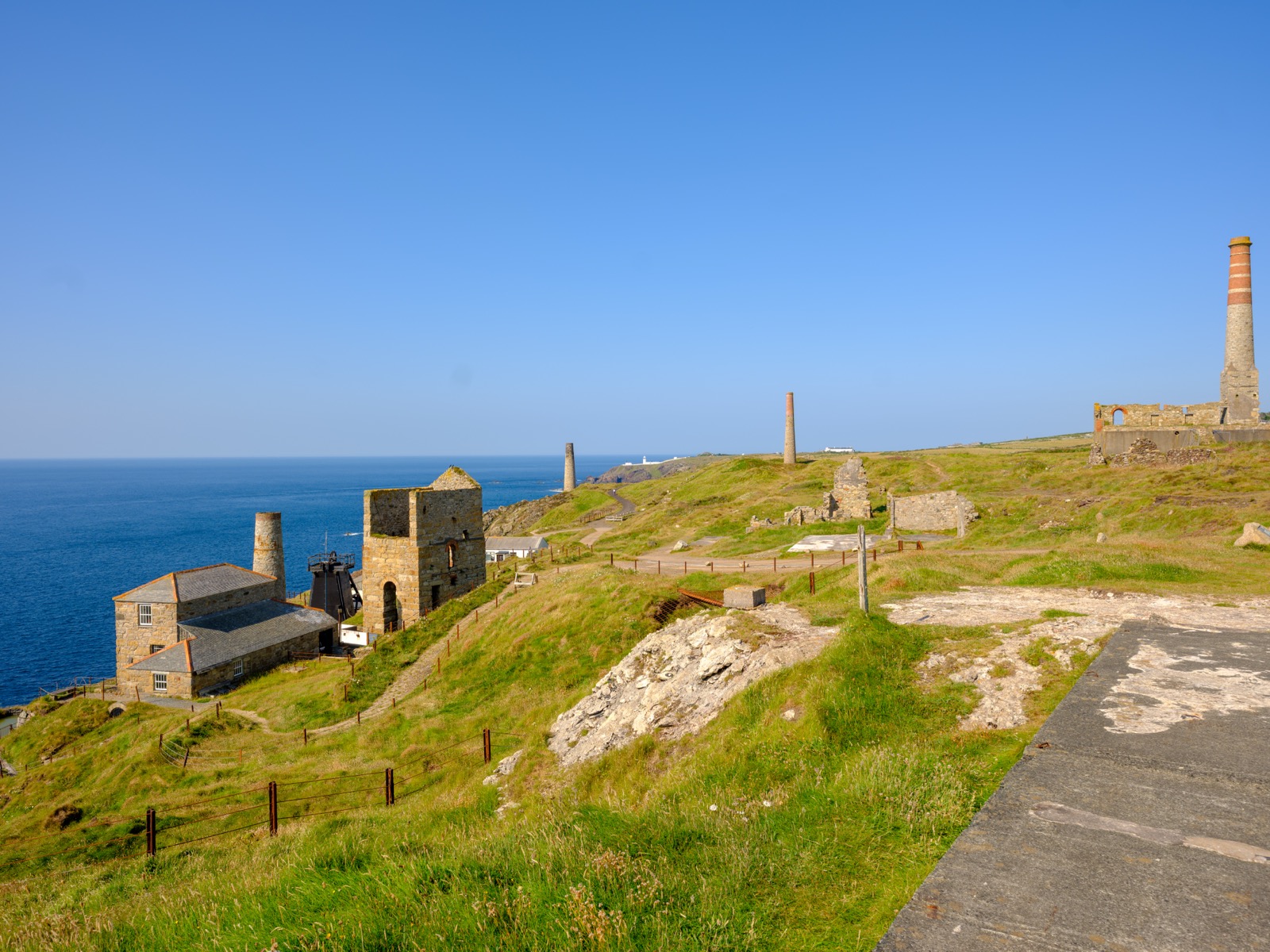
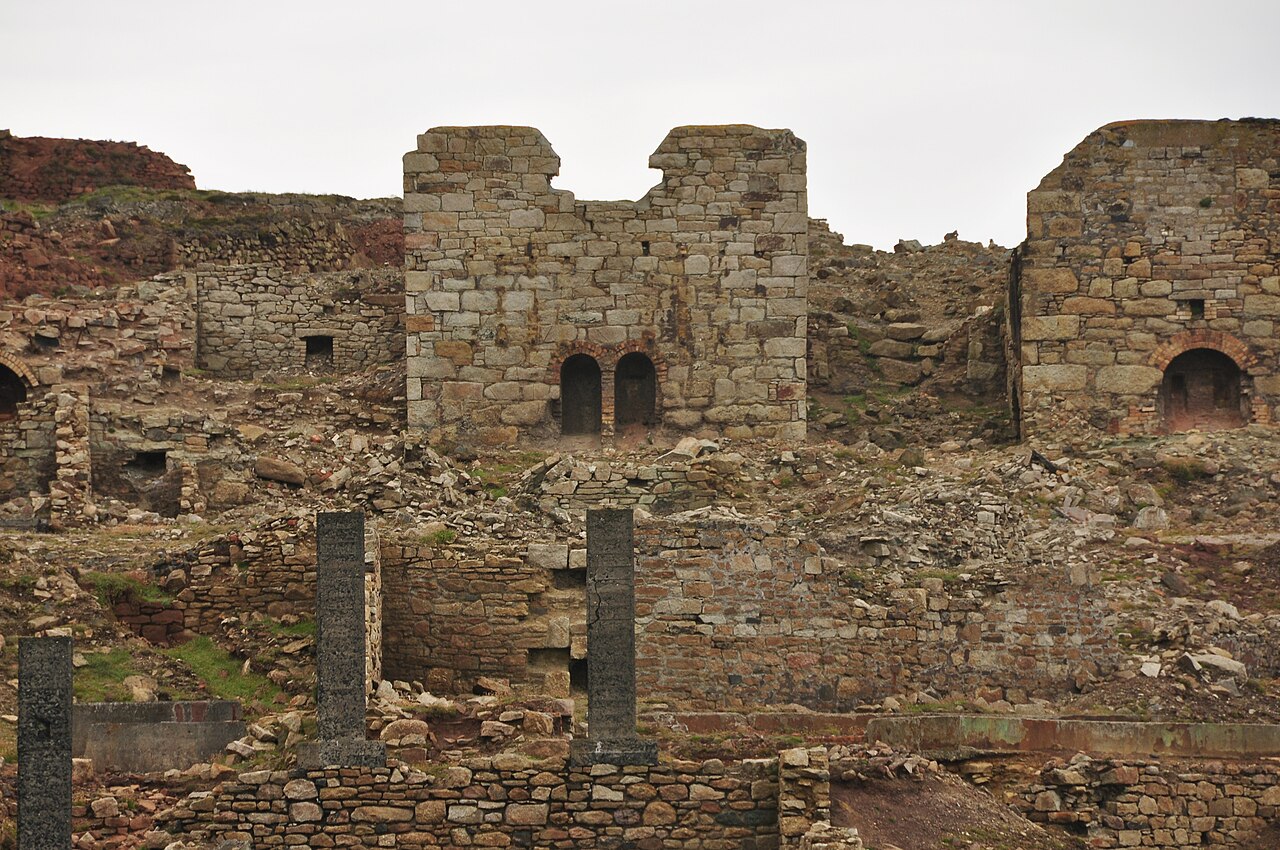
For one stretch, make it the coast. The National Trust’s Tin Coast is a seven-mile route from Pendeen lighthouse to Cape Cornwall, on ground where people hauled out tin and copper for over 2000 years. Botallack, Cape Cornwall and Levant hold the best concentration of combined tin and arsenic processing sites in the world, and Levant’s engine house has a working 1840 beam engine that runs on steam. Geevor, bought by Cornwall County Council in 1992 as a heritage museum, is the largest preserved mining site in Britain.
Common questions
Why did they stop mining tin in Cornwall?
Cheaper tin from Bolivia and east Asia took the market. On 24 October 1985 the International Tin Council announced that it could not pay its debts. Without financial assistance no Cornish tin producer could survive the crisis. Geevor went on care and maintenance in 1990, Wheal Jane closed in March 1991 and South Crofty closed in 1998.
Why is Cornwall so mineral rich?
A granite mass about 280 million years old lies beneath much of Cornwall and Devon. Cracks in that hard rock let molten rock surge through, leaving tin, copper and other minerals. Cassiterite, the tin ore, comes with it.
Is there still tin mining in Cornwall?
No tin mine is producing in Cornwall yet. South Crofty, the last in Europe, closed in 1998. Its owner reported dewatering below 400 metres in October 2026, with permission to mine valid to 2071, backed by a £28.6m National Wealth Fund investment in January 2025 and a shareholder loan of up to £52 million announced in May 2026. Across the Tamar, Hemerdon in Devon has begun producing tungsten and tin concentrate in its restart.
Read next
Tin from the sea
Offshore Tin in Cornwall: Is Anyone Dredging the Seabed, and What Would It Do?
Is tin being dredged off Cornwall? What seabed tin is, whether a licence application is open, what dredging does and how the public can comment.
UK marine licensing
UK Marine Licence Explained: Who Needs One, Who Grants It and What It Costs
How a UK marine licence works: the activities that need one, the MMO and the other regulators, the application steps, fees, conditions, appeals and penalties.
Cornish tin
South Crofty Tin Mine: Closure, Ownership, Depth and the Reopening Work
South Crofty at Pool, Cornwall: why the last Cornish tin mine closed in 1998, who owns it, how deep it goes, and the dated state of the reopening work.
Sources
- Mining in Cornwall and Devon · Wikipedia · en.wikipedia.org · checked 20 October 2026
- A Brief History of Mining in Cornwall · Wilderness England · wildernessengland.com · checked 20 October 2026
- Cornubian batholith · Wikipedia · en.wikipedia.org · checked 20 October 2026
- Cornwall and West Devon Mining Landscape · Wikipedia · en.wikipedia.org · checked 20 October 2026
- Stannary law · Wikipedia · en.wikipedia.org · checked 20 October 2026
- South Crofty · Wikipedia · en.wikipedia.org · checked 20 October 2026
- Geevor Tin Mine · Wikipedia · en.wikipedia.org · checked 20 October 2026
- Dolcoath Mine · Wikipedia · en.wikipedia.org · checked 20 October 2026
- Botallack Mine · Wikipedia · en.wikipedia.org · checked 20 October 2026
- History of Cornish Tin Mining at King Edward Mine · King Edward Mine · kingedwardmine.co.uk · checked 20 October 2026
- The Spread of Cornish Mining around the Globe · Cornish Mining World Heritage Site · cornishmining.org.uk · checked 20 October 2026
- Visiting the Tin Coast · National Trust · nationaltrust.org.uk · checked 20 October 2026
- Tin mining · Wikipedia · en.wikipedia.org · checked 20 October 2026
- Metalliferous Mine Waste in West Cornwall: The Implications for Coastal Management · M. G. Healy, Mary Immaculate College repository · dspace.mic.ul.ie · checked 20 October 2026
- Cassiterite · Wikipedia · en.wikipedia.org · checked 20 October 2026
- The Collapse of the International Tin Agreement (IDS Bulletin, 1 October 1986) · Institute of Development Studies · ids.ac.uk · checked 21 October 2026
- Tin market and industry since the 1985 tin crisis · UNCTAD · unctad.org · checked 21 October 2026
- The story behind Geevor · Geevor Tin Mine · geevor.com · checked 21 October 2026
- Geevor Tin Mine · Geevor Tin Mine · geevor.com · checked 21 October 2026
- Wheal Jane mine water treatment scheme (GOV.UK) · Coal Authority and Mining Remediation Authority (GOV.UK) · gov.uk · checked 21 October 2026
- National Wealth Fund drives growth with a £28.6m investment into Cornish Metals Inc (28 January 2025) · National Wealth Fund · nationalwealthfund.org.uk · checked 21 October 2026
- The National Wealth Fund backs Cornish Metals with new funding for South Crofty tin project (15 May 2026) · National Wealth Fund · nationalwealthfund.org.uk · checked 21 October 2026
- Operations update for the South Crofty tin project (RNS, 12 October 2026) · Cornish Metals plc · investegate.co.uk · checked 21 October 2026
- Tungsten West plc results announcement (RNS 1916T, 3 September 2026) · Tungsten West plc · data.fca.org.uk · checked 21 October 2026
- Cornwall and West Devon Mining Landscape · UNESCO World Heritage Centre · whc.unesco.org · checked 21 October 2026
- Cornish mining: a short history · Bernard Deacon · bernarddeacon.com · checked 21 October 2026
- Levant Mine and Beam Engine · National Trust · nationaltrust.org.uk · checked 21 October 2026
- Engines and Steam Technologies · Cornish Mining World Heritage Site · cornishmining.org.uk · checked 21 October 2026
- Explosives and the Safety Fuse · Cornish Mining World Heritage Site · cornishmining.org.uk · checked 21 October 2026
- Early Mining Methods · Cornish Mining World Heritage Site · cornishmining.org.uk · checked 21 October 2026
Image credits
- Engine houses and chimneys on the cliffs at Levant, on the Tin Coast. — ArildV, CC BY-SA 4.0, via Wikimedia Commons
- Ruined calciner buildings at Geevor Mine, near Pendeen. — Nilfanion, CC BY-SA 4.0, via Wikimedia Commons


Rules, fees and prices change: each source shows the date it was read. How we check facts · Report an error · Back to top.