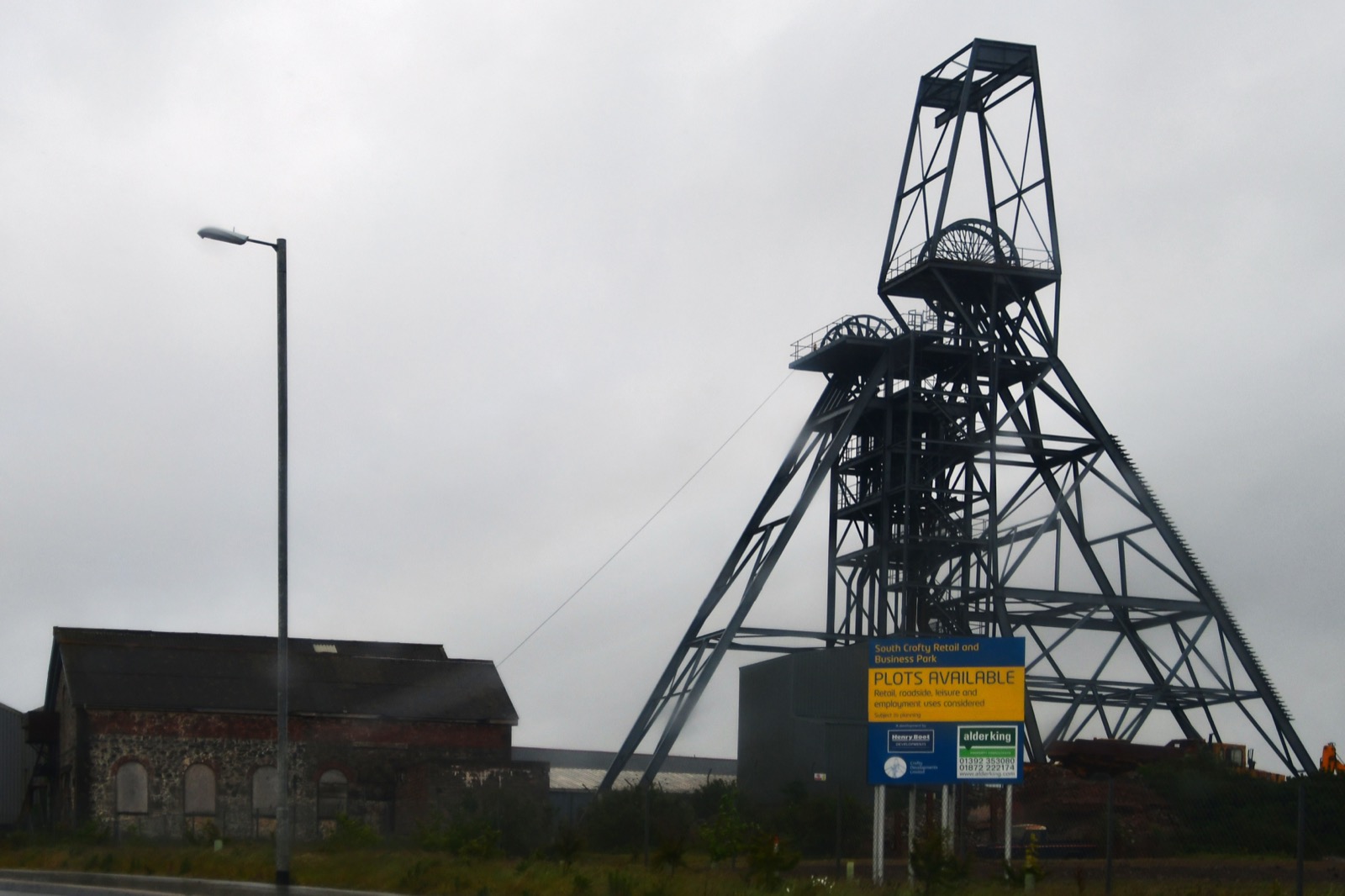
South Crofty is the Cornish mine that might mine tin again, and the wait has been long. Tin and copper came out of the ground at Pool, between Camborne and Redruth, for over 400 years, until closure in March 1998. The date to watch now is when the pumps clear the water down to the 400-level, about 730 metres below surface, which the owner is tracking to reach in the first half of 2027. The Cornish tin hub places it among the county’s other mines.
Is South Crofty reopening?
Not yet. South Crofty is being prepared for reopening, and no tin is being mined there. The mine closed in 1998.
The latest operations update is dated 12 October 2026. Dewatering has reached more than 400 metres below surface, with refurbishment of the New Cook’s Kitchen (NCK) shaft progressing. Dewatering and refurbishment are tracking to reach the 400-level, about 730 metres below surface, in the first half of 2027. Do not confuse the two 400s. Mine levels are named in fathoms, not metres, so the 400-level lies about 730 metres down, well below the 400 metres dewatering has reached. That 730-metre mark is the date to watch. On the surface, the NCK service winder has been delivered and mounted, and the double-drum production winder is on site.
Elsewhere on site, work has not stopped. Bulk excavation for the process plant is substantially complete and civil works have started. On the 25-level, 260 metres of development has been completed, and trainee miners are being developed there. The company’s June 2026 update recorded dewatering through the 195-level pump station for the first time in over 28 years. Pre-production development at the 290-level, about 530 metres below surface, was then expected from Q4 2026.
Drilling has also tested ground west of the mine. The Roskear West programme drilled 2,330 metres across two holes. It confirmed tin lodes continuing west of the current mineral resource estimate and identified a new high-grade tungsten zone.
The mine holds its permissions. It is permitted to commence underground mining, valid to 2071, and to build a new processing facility. The National Wealth Fund called it a fully permitted underground tin mine in January 2025. On the operator’s estimate it could generate over 300 direct jobs.
The collapse of the tin price affected South Wheal Crofty both directly (loss of revenue) and indirectly, via increased pumping costs as neighbouring mines closed down.
Why did South Crofty close?
The mine closed because the tin price collapsed and support ran out. In October 1985 the price of tin dropped dramatically on world markets following the collapse of the International Tin Agreement. The mine went into serious decline after that year.
The mine shrank step by step after 1985. By 1988 all South Crofty ore was trucked for processing at Wheal Jane. In February 1991 the Department of Trade and Industry stopped supporting capital projects. The mine still produced about 1,900 tons of black tin in 1993.
Closure came in two steps. After several more years of depressed tin prices, South Crofty Ltd announced in August 1997 that closure was imminent. Despite further attempts to keep the mine open, closure was completed by March 1998. With it, metalliferous mining ceased in Cornwall, and South Crofty was the last tin mine to operate in Europe. The wider story of why Cornish tin ended is in the Cornish tin mining history.
Who owns South Crofty tin mine?
Cornish Metals plc owns it. The company is working towards re-opening its wholly owned and permitted South Crofty underground tin mine. Cornwall Council named Cornish Metals as the owner in June 2025.
Mineral rights are a separate layer. On 25 June 2026 the company announced a 25-year lease, the Dudnance Lease, agreed with the Preston family, who own 50% of that mineral rights area. The company holds the other 50%. Leases with the Pendarves and Vyvyan estates had been completed earlier.
It has changed hands many times since closure:
| Year | Event |
|---|---|
| 2001 | A locally formed company, Baseresult Holdings, bought the mine to reopen it |
| 2007 | Western United Mines Limited formed to own and operate it |
| 2011 | Celeste Copper Corporation entered an earn-in agreement |
| 2013 | The site was placed into administration |
| 2016 | Strongbow Exploration acquired a 100% interest from administration |
| 2020 | Strongbow renamed Cornish Metals Inc. |
By December 2025 the company was Cornish Metals Inc., listed on AIM and the TSX Venture Exchange. By June 2026 it appeared on AIM as Cornish Metals plc.
How deep is South Crofty Mine?
The mine extends 3,000 feet (910 m) down and almost two and a half miles across, and has worked over 40 lodes. That depth was reached in stages, as the table shows. The modern levels are measured from the surface in metres.
| Level or milestone today | Depth below surface |
|---|---|
| Tuckingmill decline, 25-level | About 45 metres |
| No. 1 level | About 50 metres |
| NCK mid-shaft pump station | About 360 metres |
| 290-level | About 530 metres |
| Lower pump station, 400-level | About 730 metres |
The historic workings were shallower in places than the pump levels are today:
| Historic workings | Depth below surface |
|---|---|
| 1880 working level | 260 fathoms, 480 m |
| 1914 workings | 310 fathoms, 570 m |
The Roskear shaft stands about 850 metres west of the NCK shaft. It is planned as the primary ventilation shaft and secondary means of egress.
From copper to tin: how the mine grew
The mine began as a copper working. Evidence of mining at South Crofty dates back to 1592, with full-scale mining starting in the mid-17th century. For several centuries its shallow workings exploited copper rather than the deeper tin.
In 1710 Francis Bassett took a lease of Penhellick Vean and a drainage adit was begun. By 1863 the remainder was renamed South Wheal Crofty. By 1873 the mine depended on tin, and copper remained significant until 1880, when the shallow reserves were exhausted. A fall in the tin price then hit it twice: through lost revenue, and through increased pumping costs as neighbouring mines closed down. Mining was suspended in February 1896 and the mine flooded. Water runs through the whole story, and dewatering is still the news today. South Crofty Limited was incorporated in 1906.
Growth came by acquisition and modernisation. The mine bought Dolcoath in 1936. Production exceeded 100,000 tons of ore in 1968 for the first time. By 1975 the mill was processing more than 200,000 tonnes of ore to yield around 1,500 tonnes of tin concentrate.
South Crofty and the World Heritage Site
South Crofty sits inside a World Heritage Site. It is in the Camborne and Redruth area, alongside the Great Flat Lode, a flat-dipping vein extremely rich in tin. The area has the highest concentration of historic mining sites anywhere in the world. The site was inscribed in 2006.
That status has already shaped the reopening. In November 2012 UNESCO called for a halt on reopening work until an assessment of the project’s impact had been made. In 2014 the World Heritage Committee drafted a decision to put the site on the List of World Heritage in Danger, then rejected it at its 38th session in favour of a follow-up monitoring mission. The full story of the listing is on the Cornwall and West Devon Mining Landscape page.
Public money and planning
Government bodies have put money behind the work. On 28 January 2025 the National Wealth Fund announced a £28.6m direct equity investment in Cornish Metals Inc, to help finance the reopening. It was part of a £56m funding round for early works, shaft refurbishment and dewatering. On 15 May 2026 the Fund announced further backing, a shareholder loan of up to £52 million including up to £35 million from the Fund.
The Cornwall Council Good Growth Programme awarded £4,190,500 in June 2025. It is part of a £6.8 million project at the Bartles Foundry site, which had conditional planning approval in January. The new workshop and stores building there opened on 22 September 2026. It will use geothermal energy recovered from mine water. The UK Government part-funded it through a grant of up to £4.2 million.
Why the interest? The UK government treats tin as a critical mineral. About two-thirds of the tin mined today comes from China, Myanmar and Indonesia. What tin is used for is covered in What Is Tin Used For?.
Common questions
Is South Crofty Mine reopening?
The owner is preparing it for reopening but the mine is not producing. On 12 October 2026 it reported dewatering below 400 metres, a service winder installed and a production winder on site. Tin mining stopped in 1998.
Is South Crofty inside the World Heritage Site?
Yes. It lies in the Camborne and Redruth area, one of ten areas that make up the Cornwall and West Devon Mining Landscape, inscribed in 2006. UNESCO asked for reopening work to halt in November 2012.
When did mining at South Crofty start?
Evidence of mining at South Crofty dates back to 1592, with full-scale mining beginning in the mid-17th century. For several centuries the shallow workings gave copper, not tin.
Read next
Sources
- Good Growth Programme backs mining at South Crofty with £4.19m investment (12 June 2025, via Wayback) · Cornwall Council · cornwall.gov.uk · checked 21 October 2026
- Operations update for the South Crofty tin project (RNS, 12 October 2026) · Cornish Metals plc regulatory announcement, via Investegate · investegate.co.uk · checked 21 October 2026
- South Crofty · Wikipedia · en.wikipedia.org · checked 21 October 2026
- Cornish Metals plc · Cornish Metals plc · cornishmetals.com · checked 21 October 2026
- A5 Camborne and Redruth (Cornish Mining WHS) · Cornish Mining World Heritage Site Office, Cornwall Council · cornishmining.org.uk · checked 21 October 2026
- Additional mineral lease signed at South Crofty (RNS, 25 June 2026) · Cornish Metals plc regulatory announcement, via Investegate · investegate.co.uk · checked 21 October 2026
- Operations update for the South Crofty tin project (RNS, 1 December 2025) · Cornish Metals Inc. regulatory announcement, via Investegate · investegate.co.uk · checked 21 October 2026
- Cornwall and West Devon Mining Landscape (UNESCO World Heritage Centre, via Wayback) · UNESCO World Heritage Centre · whc.unesco.org · checked 21 October 2026
- Operations update for the South Crofty tin project (RNS, 10 June 2026) · Cornish Metals plc regulatory announcement, via Investegate · investegate.co.uk · checked 21 October 2026
- National Wealth Fund drives growth with a £28.6m investment into Cornish Metals Inc (28 January 2025) · National Wealth Fund · nationalwealthfund.org.uk · checked 21 October 2026
- Cornwall and West Devon Mining Landscape · Wikipedia · en.wikipedia.org · checked 21 October 2026
- The National Wealth Fund backs Cornish Metals with new funding for South Crofty tin project (15 May 2026) · National Wealth Fund · nationalwealthfund.org.uk · checked 21 October 2026
Image credits
- The headframe and old buildings at South Crofty, Pool, in 2019. — August Schwerdfeger, CC BY 4.0, via Wikimedia Commons

Rules, fees and prices change: each source shows the date it was read. How we check facts · Report an error · Back to top.