On this page
No exploration or exploitation of deep-sea minerals in the Area may legally take place until the entity concerned has signed a contract with the International Seabed Authority. Most readers want one thing from this page: where the rulebook stands, and that is under “Where the draft rules stand now”. The sections before it describe the machinery, so skip them unless you need to know who sits where. After that come the exploration contracts, the money and the membership. The deep-sea mining hub places it in the wider subject, and what deep-sea mining is covers the minerals and methods.
What the International Seabed Authority is and does
The International Seabed Authority is an autonomous international organization established under the 1982 United Nations Convention on the Law of the Sea (UNCLOS) and the 1994 Agreement relating to the Implementation of Part XI. It is the organization through which States Parties to UNCLOS organize and control all mineral-resources-related activities in the Area for the benefit of humankind as a whole. The Convention uses almost the same words: the Authority is the organization through which States Parties organize and control activities in the Area, particularly with a view to administering its resources.
The Area and its resources are the common heritage of humankind. The Area covers around 54 per cent of the total area of the world’s oceans. ISA manages these resources for “the shared benefit of all humankind”. It is the world’s only international body that focuses on the deep-sea area beyond national borders.
The mandate has a second half. ISA has the mandate to ensure the effective protection of the marine environment from harmful effects that may arise from deep-seabed-related activities. In launching the DeepData database in 2019, ISA made publicly available for the first time the biggest and most complete global repository of environmental data and information on the deep-sea area.
How it began
The Convention established the Authority in Article 156, and all States Parties are ipso facto members of it. The Authority is based on the principle of the sovereign equality of all its members. ISA came into existence on 16 November 1994, upon the entry into force of UNCLOS. It became fully operational as an autonomous international organization in June 1996, when it took over premises previously used by the United Nations Kingston Office for the Law of the Sea. It obtained observer status to the United Nations in October 1996.
Where the ISA is based
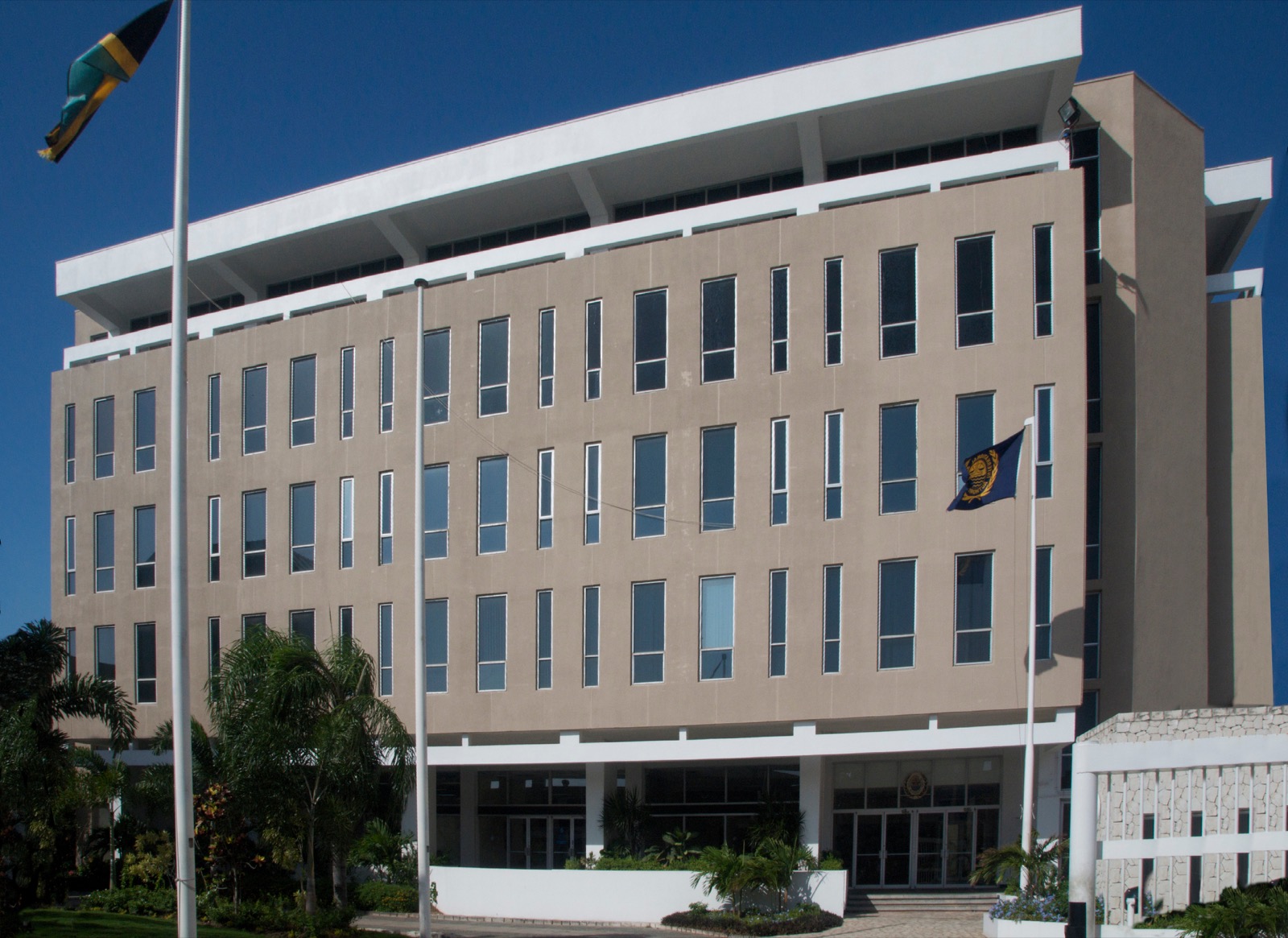
ISA has its headquarters in Kingston, Jamaica. The address is International Seabed Authority, 14 - 20 Port Royal Street, Kingston, Jamaica. The Convention fixes the seat of the Authority in Jamaica. The annual plenary sessions, which usually last two weeks, are held in Kingston.
How the ISA is organised
There are four organs and two advisory bodies, and the Council is the one that matters for mining rules. The Convention establishes an Assembly, a Council and a Secretariat as the principal organs of the Authority. The Enterprise is a further organ, established by Article 170 and Annex IV of the Convention. The Legal and Technical Commission and the Finance Committee advise them.
The Assembly
The Assembly is one of the principal organs of ISA, empowered to establish the general policies. It comprises all ISA members. Under the Convention, the Assembly consists of all the members of the Authority, and each member has one representative, who may be accompanied by alternates and advisers.
The Assembly elects the members of the Council and other bodies, as well as the Secretary-General, who heads the Secretariat. It sets the two-year budgets of ISA, and the rates by which members contribute, based on the assessment scale established by the United Nations. Following adoption by the Council, it approves the rules, regulations and procedures that ISA may establish governing prospecting, exploration and exploitation in the Area. It also examines reports from other bodies, notably the annual report by the Secretary-General.
The Assembly’s biggest powers have not been used yet, because they wait for the start of exploitation. These include decisions on the equitable sharing of financial and other economic benefits deriving from activities in the Area.
The Council
The Council is the executive organ. It establishes specific policies in conformity with UNCLOS and the general policies set by the Assembly. It consists of 36 members elected by the Assembly. The seats are split by category, as the table shows.
| Council seats | Rule | Source |
|---|---|---|
| Four members | From States Parties that consume or import more than 2 per cent of the world total of commodities from the minerals of the Area | |
| Four members | From the eight States Parties with the largest investments in preparation for and conduct of activities in the Area | |
| Four members | From major net exporters of those minerals, including at least two developing States | |
| Six members | From developing States Parties representing special interests | |
| Eighteen members | Elected for equitable geographical distribution, with at least one member from each region |
The five geographical regions are Africa, Asia-Pacific, Eastern Europe, Latin America and the Caribbean, and Western Europe and Others.
The Council supervises and coordinates the implementation of the regime established by UNCLOS to promote and regulate exploration for and exploitation of deep-sea minerals by States, corporations and other entities. Its task is to draw up the terms of contracts, approve contract applications, oversee their implementation, and establish environmental and other standards. It approves 15-year plans of work in the form of contracts, in which governmental and private entities spell out the mining activities they intend to conduct in precisely defined geographical areas.
It adopts and applies provisionally, pending approval by the Assembly, the rules, regulations and procedures by which ISA controls prospecting, exploration and exploitation in the Area. Where an environmental threat arises from seabed activities, it may issue emergency orders to prevent harm, including orders to suspend or adjust operations. It also proposes candidates for Secretary-General and reviews and recommends ISA’s budget for approval by the Assembly.
The Secretariat and the Secretary-General
The Secretariat is one of the three principal organs of ISA. Its seat is in Kingston, Jamaica. It is headed by the Secretary-General, who is the chief administrative officer of ISA. Its tasks include ensuring compliance with plans of work for exploration and exploitation approved in the form of contracts.
Leticia Reis de Carvalho assumed office as the fourth Secretary-General of ISA on 1 January 2025, following her election on 2 August 2024. The Convention gives the Assembly the power to elect the Secretary-General from among the candidates proposed by the Council. A Secretary-General serves a four-year term.
The Legal and Technical Commission
The Legal and Technical Commission (LTC) is an organ of the Council, made up of 41 members elected by the Council for 5 years starting from 1 January 2023. Members are elected from among candidates nominated by the State Parties. The Council shall take due account of the need for equitable geographical distribution and the representation of special interests. Meetings of the LTC usually precede the annual sessions of ISA, and it presents a report to the Council during the session. In 2013, the LTC began holding two sessions per year.
The Finance Committee
The Finance Committee was created under Part XI of the 1994 Agreement to oversee the financing and financial management of ISA. It consists of 15 members elected by the Assembly for five years, taking into account equitable geographical distribution amongst regional groups. It meets during the annual session of ISA and tables its report on a budget of ISA to the Assembly.
The Enterprise
The Enterprise is the organ that is to carry out activities in the Area, including the transporting, processing and marketing of minerals recovered from the Area. Until it begins to operate independently of the Secretariat, the Secretariat of the Authority performs its functions. Between 2018 and 2023, these functions were performed by a Special Representative of the Secretary-General for the Enterprise. As of 2024, the Enterprise is staffed by an interim director general but does not operate independently of the Secretariat.
The Mining Code and the draft exploitation regulations
ISA has undertaken work since 2014 to develop regulations for the exploitation of mineral resources in the Area. The process culminated in draft regulations submitted by the Legal and Technical Commission for consideration by the Council in 2019. The Council has adopted three sets of Exploration Regulations, for polymetallic nodules, polymetallic sulphides and cobalt-rich crusts.
When this page was written, the ISA page on the draft exploitation regulations had the Draft Exploitation Regulations under negotiation by the Council. The steps it records, in date order:
- In July 2023 the Council took stock of progress and approved a road map with a view to adoption during the thirtieth session of the Authority (2025).
- A consolidated text of the Draft Exploitation Regulations was released on 16 February 2024.
- In July 2024 the Council finished its first reading of the text, covering the preamble to draft regulation 107.
- On 26 July 2024 the President of the Council introduced a revised road map.
- On 29 November 2024 the President issued a Revised Consolidated Text of the Draft Exploitation Regulations.
- During the first part of the thirtieth session (17-28 March 2025) the Council negotiated from the preamble to draft regulation 55 of the Revised Consolidated Text.
Informal working groups, intersessional working groups and “Friends of the President” were set up as ways to advance the work. The Authority’s main legislative accomplishment so far has been the adoption, in the year 2000, of rules governing exploration for polymetallic nodules.
Where the draft rules stand now
The road map approved in July 2023 aimed at adoption during the thirtieth session in 2025. That target was missed: the Council’s latest decision, of 24 July 2026, asks for a new road map with milestones for adoption instead of recording adoption. The sessions since the March 2025 meeting, in date order:
| When | What the Council did | Source |
|---|---|---|
| 7-18 July 2025 (closed 21 July) | Worked through the Revised Consolidated Text to draft regulation 107, set up seven “Friends of the President” groups and adopted decision ISBA/30/C/18 on a thematic approach to the outstanding issues | |
| 9-19 March 2026 | Concluded Part I of the 31st session after nine days; discussed 29 of the 32 outstanding issues; agreed in principle to an Equalisation Mechanism and a Compliance Committee | |
| 13-24 July 2026 | Adopted decision ISBA/31/C/38: a Secretariat road map with milestones for adoption, due as a draft by 31 October 2026, with written comments by 31 December 2026 |
The July 2026 decision opens by reiterating that commercial exploitation of mineral resources in the Area should not be carried out in the absence of rules, regulations and procedures relating to exploitation. It also asks for an advanced negotiating text at least six weeks before the first part of the thirty-second session. The Council approved the extension of six exploration contracts in March 2026.
The route that bypasses ISA
The United States is not a party to the Law of the Sea Convention. Its Deep Seabed Hard Mineral Resources Act lets NOAA issue exploration licences and commercial recovery permits to US companies in areas beyond national jurisdiction. Executive Order 14285, signed on 24 April 2025, set the policy of speeding up seabed mineral development. On 19 August 2026 NOAA announced that the consolidated application from The Metals Company USA for an exploration licence and a commercial recovery permit in the Clarion-Clipperton Zone is in full compliance with the information requirements of that Act. The public comment period on it was set to end on 19 October 2026. If NOAA certifies the application, it would then assess the environmental impacts through an environmental impact statement.
ISA’s Secretary-General told the Council in March 2026 that unilateral action runs counter to the principles of international law and to the common heritage of humankind. Several delegations had raised the same concern.
The UK’s position and its sponsored contracts
The UK government told Parliament in a written answer in September 2025 that it supports a moratorium on the granting of exploitation contracts by ISA. It will not sponsor or support the issuing of any such contract until there is sufficient scientific evidence about the potential impact on deep sea ecosystems and strong enforceable environmental regulations, standards and guidelines are in place.
Sponsorship runs through UK law. Under the Convention a contractor must be sponsored by a State Party that can exercise effective control over it, and must then enter into a contract with ISA. The Deep Sea Mining Act 2014 amends the 1981 Act to give effect to the UK’s obligations under Part XI of the Convention. ISA’s contract list shows the two contracts that carry the UK as sponsoring state, both held by UK Seabed Resources Ltd, in the next section.
Exploration contracts
ISA has entered into 15-year contracts for the exploration of polymetallic nodules, polymetallic sulphides and cobalt-rich ferromanganese crusts in the deep seabed with 22 contractors. With the entry into force of UNCLOS in 1994, exploration for mineral resources in the Area began to be regulated under exploration contracts. Exploration was predominantly undertaken by national agencies until 2010, when private companies became involved. Each contractor must develop a contingency plan, report annually on its activities and propose a training programme for developing countries.
ISA lists every contract, with its date, sponsoring state and area, on its three mineral pages: polymetallic nodules, polymetallic sulphides and cobalt-rich crusts. The lists change as contracts are signed, so check ISA for the current entries.
Two entries list the United Kingdom as sponsoring state: UK Seabed Resources Ltd. is listed with contracts dated 08 Feb 2013 and 29 Mar 2016 in the Clarion-Clipperton Fracture Zone. For how work in UK waters is licensed, see the UK marine licence guide.
Who funds the ISA
ISA depends on assessed contributions for 75 percent or more of its income. Assessed contributions consist of contributions to the budget and the Working Capital Fund. The Assembly assesses them under an agreed scale based on the scale used for the regular budget of the United Nations.
The Convention lists what makes up the funds of the Authority. They include assessed contributions made by members, and funds received in connection with activities in the Area. They also include voluntary contributions made by members or other entities. Contributions are paid into a special account to meet the administrative expenses of the Authority until it has sufficient funds from other sources.
The budget process runs through the organs. The Secretary-General drafts the proposed annual budget and submits it to the Council, which considers it and submits it to the Assembly with any recommendations. The Assembly sets the two-year budgets.
ISA’s contributions dashboard is updated twice a month, so recent payments may not show. It showed these totals, in USD: assessed contributions for 2026 of 10,777,250.00, outstanding 2026 contributions of 746,826.35, arrears from prior years of 719,897.61 and total outstanding of 1,466,723.96.
The five largest assessed contributions for 2026, in USD, as listed on the dashboard when this page was written. The dashboard lists every member.
| Member | Assessed contribution 2026 (USD) | Source |
|---|---|---|
| China | 2,161,049.66 | |
| Japan | 1,138,043.26 | |
| Germany | 865,751.57 | |
| United Kingdom of Great Britain and Northern Ireland | 619,810.69 | |
| France | 611,735.44 |
Members and observers
ISA has 172 members: 171 member states and the European Union (as of 6 February 2026). Under Article 156(2) of the Convention, all States Parties to UNCLOS are ipso facto members. The United Kingdom became party to the Convention on 25 July 1997. Jamaica, the host state, became party on 21 March 1983. The United States has not ratified the Convention and so is not a member of ISA, although it sends delegations as an observer.
As of August 2026, ISA has 141 observers: 26 observer states, 37 intergovernmental organizations and 78 non-governmental organizations. ISA’s member states page lists each member with its regional group and the dates it became party to the Convention and the Agreement on Part XI.
Common questions
What does the International Seabed Authority do?
ISA is the organization through which States Parties to the Law of the Sea Convention organize and control all mineral-resources-related activities in the Area for the benefit of humankind as a whole. It also has the mandate to ensure the effective protection of the marine environment from harmful effects of deep-seabed activities.
Has the International Seabed Authority adopted rules for commercial deep-sea mining?
Not yet. The July 2023 road map aimed at adoption in 2025, but on 24 July 2026 the Council instead asked the Secretariat to draft a road map with milestones for adoption, with a first draft due by 31 October 2026. The Council reiterated that commercial exploitation should not be carried out in the absence of rules, regulations and procedures.
Can the United States mine the deep seabed without ISA?
The United States is not a party to the Law of the Sea Convention, and its Deep Seabed Hard Mineral Resources Act lets NOAA issue exploration licences and commercial recovery permits to US companies. NOAA found the first consolidated application, from TMC USA, in full compliance with the Act's information requirements, and its public comment period ran to 19 October 2026. ISA's Secretary-General has said unilateral action runs counter to international law.
Can anyone mine the deep seabed without an ISA contract?
No exploration or exploitation of deep-sea minerals in the Area may legally take place until the entity has signed a contract with ISA. ISA has entered into 15-year exploration contracts with 22 contractors. Its draft exploitation regulations were still under negotiation: on 24 July 2026 the Council asked the Secretariat for a road map with milestones for adoption.
Read next
Deep-sea mining
What Is Deep-Sea Mining? Minerals, Methods, Rules and the Debate
What deep-sea mining is, which minerals it targets, who regulates it (the ISA, UNCLOS, NOAA), who holds exploration rights, the UK position and the debate.
UK marine licensing
UK Marine Licence Explained: Who Needs One, Who Grants It and What It Costs
How a UK marine licence works: the activities that need one, the MMO and the other regulators, the application steps, fees, conditions, appeals and penalties.
Sources
- About ISA · International Seabed Authority · isa.org.jm · checked 20 October 2026
- Contributions Dashboard · International Seabed Authority · isa.org.jm · checked 20 October 2026
- Structure and Mandate of the Council · International Seabed Authority · isa.org.jm · checked 20 October 2026
- Exploration Contracts · International Seabed Authority · isa.org.jm · checked 20 October 2026
- The Secretary-General · International Seabed Authority · isa.org.jm · checked 20 October 2026
- United Nations Convention on the Law of the Sea · United Nations · un.org · checked 20 October 2026
- The Secretariat · International Seabed Authority · isa.org.jm · checked 20 October 2026
- The Assembly · International Seabed Authority · isa.org.jm · checked 20 October 2026
- Member States · International Seabed Authority · isa.org.jm · checked 20 October 2026
- Draft exploitation regulations · International Seabed Authority · isa.org.jm · checked 20 October 2026
- Deep dive into the International Seabed Authority: Why it matters now · UN News · news.un.org · checked 20 October 2026
- International Seabed Authority · Wikipedia · en.wikipedia.org · checked 20 October 2026
- The Enterprise · International Seabed Authority · isa.org.jm · checked 20 October 2026
- The Council · International Seabed Authority · isa.org.jm · checked 20 October 2026
- The Legal and Technical Commission · International Seabed Authority · isa.org.jm · checked 20 October 2026
- The Finance Committee · International Seabed Authority · isa.org.jm · checked 20 October 2026
- Minerals: Polymetallic Nodules · International Seabed Authority · isa.org.jm · checked 20 October 2026
- Minerals: Polymetallic Sulphides · International Seabed Authority · isa.org.jm · checked 20 October 2026
- Minerals: Cobalt-rich Ferromanganese Crusts · International Seabed Authority · isa.org.jm · checked 20 October 2026
- Observers · International Seabed Authority · isa.org.jm · checked 20 October 2026
- ISA Council concludes second part of its 30th session (15 August 2025) · International Seabed Authority · isa.org.jm · checked 21 October 2026
- ISA Council advances negotiations on the Mining Code (19 March 2026) · International Seabed Authority · isa.org.jm · checked 21 October 2026
- Decision ISBA/31/C/38 (24 July 2026) · International Seabed Authority · isa.org.jm · checked 21 October 2026
- NOAA advances review of first-ever deep seabed mining commercial recovery application · NOAA · noaa.gov · checked 21 October 2026
- Deep Seabed Hard Minerals Mining · NOAA · oceanservice.noaa.gov · checked 21 October 2026
- Executive Order 14285: Unleashing America's Offshore Critical Minerals and Resources · The White House · whitehouse.gov · checked 21 October 2026
- Written question 69209 on deep sea mining (answered 1 September 2025) · UK Parliament · questions-statements.parliament.uk · checked 21 October 2026
- Deep Sea Mining Act 2014: Explanatory Notes, Background · legislation.gov.uk · legislation.gov.uk · checked 21 October 2026
- Deep Sea Mining Act 2014, section 1 · legislation.gov.uk · legislation.gov.uk · checked 21 October 2026
Image credits
- The International Seabed Authority headquarters in Kingston, Jamaica. — James A.R. McFarlane, CC BY-SA 3.0, via Wikimedia Commons

Rules, fees and prices change: each source shows the date it was read. How we check facts · Report an error · Back to top.